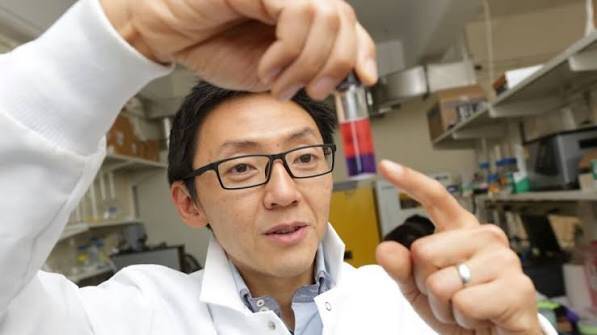
Hey everyone, I'm going to walk you through Columbia Engineering's research "A New Method to Unlock Vast Lithium Stores." The researchers developed a temperature-sensitive solvent that pulls lithium directly out of salty underground brines. It's a faster, cheaper, and cleaner option than the huge evaporation ponds used today.
- Lithium demand is rising fast because of electric vehicles and the large batteries that store wind and solar power, but current production methods are slow and need high-quality sources found in only a few places.
- About 40% of lithium starts as salty brine under deserts, and almost all of it is extracted by solar evaporation, where brine sits in giant ponds for up to two years until enough water evaporates.
- Evaporation only works in dry, flat areas with lots of land, like Chile's Atacama Desert or parts of Nevada, and it uses large amounts of water in places that can't spare it.
- The new method, called switchable solvent selective extraction (S3E), uses a solvent that pulls lithium and water out of the brine at room temperature and releases them as a purified stream when heated, so the solvent can be reused.
- The process is highly selective, picking up lithium up to 10 times more than sodium and 12 times more than potassium, and it separates out magnesium, a common contaminant, through a precipitation step.
- In lab tests using fake brines modeled on California's Salton Sea, which is estimated to hold enough lithium for more than 375 million EV batteries, the system recovered nearly 40% of the lithium over four cycles with the same solvent.
- According to professor Ngai Yin Yip, the method is fast, selective, and easy to scale, and it can run on low-grade heat from waste sources or solar collectors.
- The team stresses that this is an early proof-of-concept that hasn't been optimized yet, but it could become an alternative to evaporation ponds and hard-rock mining and help make the clean energy supply chain itself cleaner.
Add comment
Comments