Good evening, everyone. Tonight I’m presenting the University of Birmingham’s research “New hydrogen breakthrough turns waste heat into clean fuel.” The researchers developed a perovskite catalyst that splits water into hydrogen at much lower temperatures than current methods. That means factories like steel and cement plants could use their leftover heat to make clean fuel.
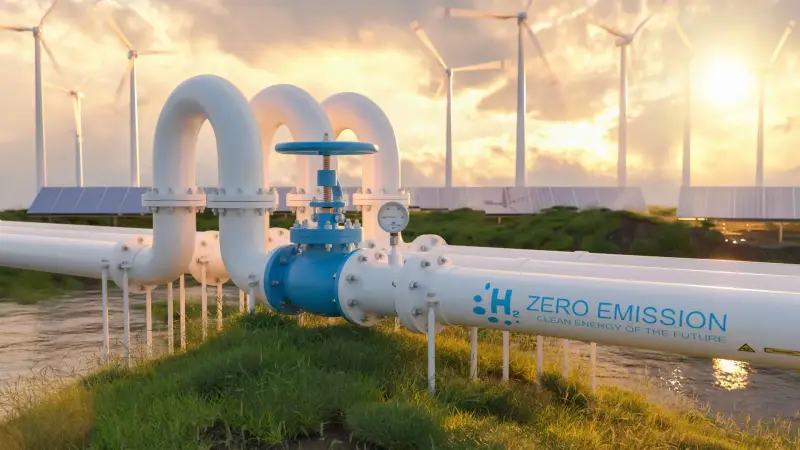
- Hydrogen is seen as an important clean fuel because burning it produces only water and heat, but about 95% of hydrogen today is still made using fossil fuels.
- One promising way to make hydrogen is thermochemical water splitting, where a catalyst separates water into hydrogen and oxygen. Current systems split water at 700–1000 °C and then need 1300–1500 °C to regenerate the catalyst.
- A team led by Professor Yulong Ding from Birmingham’s School of Chemical Engineering found that a perovskite catalyst can bring those temperatures way down, and they published the results in the International Journal of Hydrogen Energy.
- The new catalyst produced large amounts of hydrogen at just 150–500 °C and could be regenerated at 700–1000 °C, which is about 500 °C lower than current approaches.
- The team used BNCF perovskites, made from barium, niobium, calcium, and iron, which are fairly abundant, simple to manufacture, and non-toxic.
- The best version, BNCF100, kept producing hydrogen over 10 cycles, and X-ray tests showed its structure barely changed, which means it’s very stable.
- Because the process runs at lower temperatures, industries like steel, cement, glass, and chemicals could use their waste heat to make hydrogen on-site, which avoids the cost of storing and transporting it.
- An early cost analysis suggests this method could make hydrogen cheaper than both green hydrogen from electrolysis and blue hydrogen from methane with carbon capture, and the university has filed a patent and is looking for partners to commercialize it.
Add comment
Comments