Hi everyone, today I'm going to cover the Washington State University research "AI searched 100 million possibilities and found a cheaper way to 3D-print a NASA rocket alloy." The researchers used an AI model to find low-power, cheaper ways to 3D-print a heat-resistant NASA alloy, which could let ordinary commercial printers make rocket-grade parts.
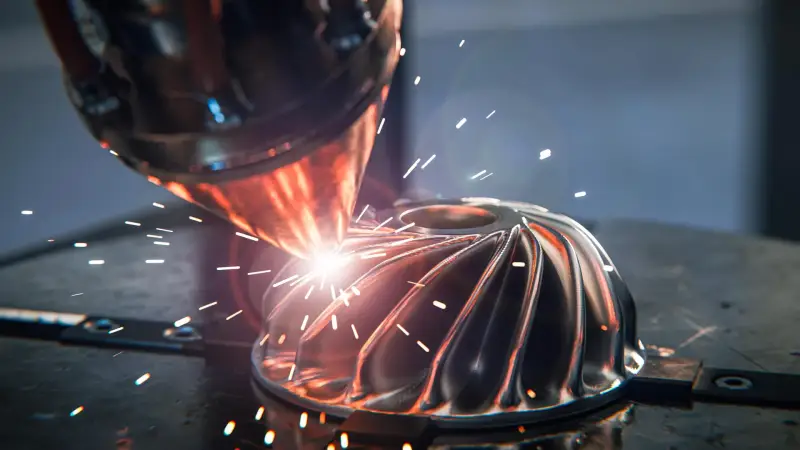
- The alloy, called GRCop-42, is made of copper, chromium, and niobium, and NASA developed it because it conducts heat well and stays strong under extreme temperatures, which makes it useful for liquid rocket engine combustion chambers.
- Even though the alloy is very useful, it is expensive and energy-intensive to 3D-print because the process usually needs a lot of laser power.
- Earlier attempts to print it at the lower power levels available on common machines had failed, and 90% of commercial printers can't print it at all.
- There are more than 100 million possible combinations of settings like laser power, speed, and material placement, and the researchers knew only a tiny fraction of them would work.
- To narrow the search, the team trained an AI model on data from 37 print attempts that had already failed in earlier experiments.
- The AI recommended small groups of new settings to test, focusing on options that looked either promising or uncertain, so each experiment taught it as much as possible.
- After only 40 experiments, the AI found six working low-power configurations, including the first successful print of the alloy at 500 watts.
- The researchers say this "democratizes" printing the alloy because more common commercial printers can now be used, although the six settings still need testing to confirm the printed parts can handle real rocket engine stress.
Add comment
Comments