Hello, today I will be talking about the research from UCLA and Ewha Womans University about "New process turns mixed plastic waste into hydrogen fuel without sorting." The researchers developed a chemical process that turns a mix of the three most common plastics into clean hydrogen fuel, without sorting them first and while trapping the carbon instead of releasing it into the air.
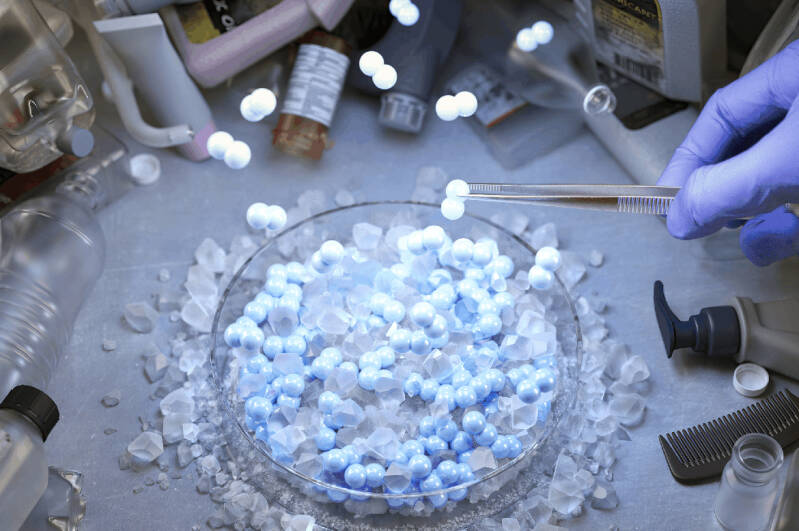
- Because plastic usually has to be sorted by type before recycling, only 9% of discarded plastic actually gets recycled, while 79% ends up in landfills and 12% is burned, releasing CO₂.
- The research was co-led by UCLA's Samueli School of Engineering and Ewha Womans University in South Korea, and it was published in the Proceedings of the National Academy of Sciences.
- The process, called alkaline thermal treatment, uses sodium hydroxide and heat to turn a mix of PET, polyethylene, and polypropylene into hydrogen that is more than 90% pure, all in one reactor.
- The method was adapted from an earlier technique that researchers Alissa Park and Woo-Jae Kim created to turn biomass like seaweed into hydrogen without adding carbon to the atmosphere.
- Compared with traditional steam gasification, the process produced much more hydrogen from PET while running 300 to 400 degrees Celsius cooler.
- Since polyethylene and polypropylene are made only of carbon-hydrogen bonds and resist the reaction, the team first heated them gently in air to add oxygen groups that give the treatment something to react with.
- Instead of escaping as CO₂, most of the carbon is trapped as solid sodium carbonate, which can later be turned into calcium carbonate to store it permanently, with less than 13% ending up as gas.
- Unlike earlier methods that either only worked on PET or released lots of CO₂, this process solves both problems at once, though the researchers say it still needs optimization and a cost analysis before it can be used at large scale.
Add comment
Comments